
Environment
Deforestation advances in Arraial d'Ajuda, Bahia
Report by Caio Vinícius Gabrig Turbay
Produced for the News Agency of the Federal University of Southern Bahia
August 2021
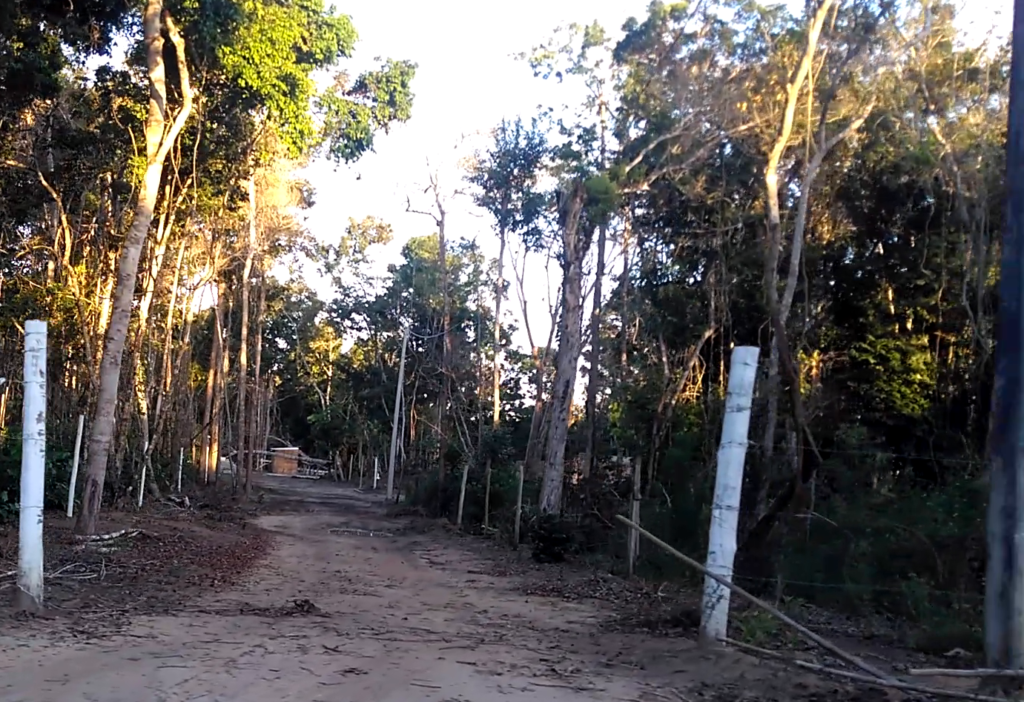
A road opened in the forest in the Villas area. The scene is increasingly common in the district and means that, year after year, dozens of hectares of forest become subdivisions and condominiums.
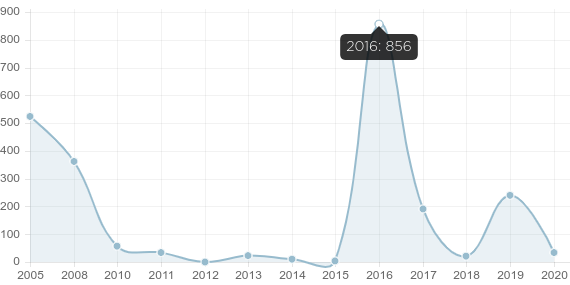
The path is short, about three hundred meters under the shade of big trees. The canopy reaches fifteen, twenty meters high. On the branches that spread out to the sides, bromeliads grow majestically. The rays of the morning sun break through the green shield and reach all the way to the ground, lighting up the trails the leafcutter ants left overnight. Leaping among the trees, two guigós, a threatened Atlantic Forest monkey, peer out and cry, warning the rest of their troop of the presence of intruders. Suddenly a noise breaks the stillness of the forest. Farther ahead, at the junction with a dusty, poorly maintained road, a group of tourists on quad bikes stops and looks at the ground. Something caught their attention: a lone sloth, trying to reach the forest on the other side of the road in a hurry, drags itself among construction rubble and trash scattered along the way. I am on the Ecological Trail, one of the routes linking the center of Arraial d’Ajuda, Porto Seguro, Bahia, to one of its new neighborhoods, known as Alto da Pitinga.
The scene of the sloth is not unusual. Curious as it may be, running into wild dogs, deer or even pumas in places affected by people is not a sign of untouched nature, as many believe. On the contrary, it is a sign that these animals are being driven out of their homes and are trying to live among ever smaller forest fragments!
And this only happens because, over the past decade, Arraial has seen a sharp advance in the clearing of its forests. Anyone who knows the region notices the destruction in very short intervals of time. The opening of new neighborhoods, the building of luxury condominiums and land invasions, such as the one in 2020 between the neighborhoods of Villas do Arraial and Alto da Pitinga, are the main culprits. As a result, huge areas of dozens or even hundreds of hectares have been cleared, not only in the district but throughout the municipality of Porto Seguro.
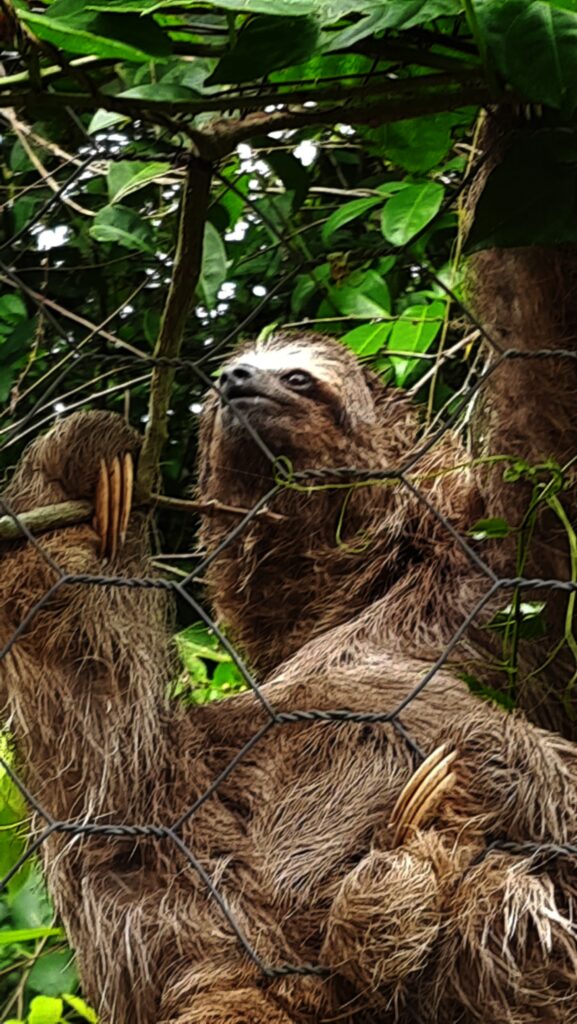
Deforestation in Porto Seguro has had its ups and downs over the past two decades. Data from the National Institute for Space Research (INPE) show a decline between 2005 and 2010, falling from 524 hectares to 57 by the end of that period. However, between 2015 and 2018, the numbers began to climb rapidly again. By 2020, an area of 1,342 hectares of forest, the equivalent of 1,342 football fields, had been destroyed. This represents an increase of approximately 1,000% compared with the previous five-year period.
By 2020, an area of 1,342 hectares of forest, the equivalent of 1,342 football fields, had been destroyed. This represents an increase of approximately 1,000% compared with the previous five-year period.
During the same period, federal government measures contributed to the weakening of environmental policies, with the loosening of laws and the dismantling of environmental monitoring, protection and enforcement agencies. According to a dossier by the National Association of Career Environmental Specialist Civil Servants (ASCEMA)1, under the Bolsonaro government alone, up to September 2020 (the date of publication), Ricardo Salles, the minister of the environment, issued 160 measures against environmental preservation.
Despite the historical cycles of exploitation in the Atlantic Forest, such as the extraction of Pau-Brasil (brazilwood) in the pre-colonial period, or the opening of sugarcane and coffee plantations in colonial times, many forested areas in southern Bahia still retain characteristics of virgin forest, little altered by humans. The recent history of deforestation goes back to the 1970s. At that time, sawmills were set up in the city of Eunápolis and began receiving logs from large trees cut in Caraíva, Trancoso, Arraial d’Ajuda and Corumbau. This is what Cacique Ipê, an Indigenous leader and social and environmental activist, recounts: “In '78, the lumber company people put up a lot of sawmills here in the region. This whole region here was forest, from Eunápolis, Caraíva, Barra Velha. The loggers finished everything off! They set up the sawmills in Eunápolis, but took the timber from here in the region!”.
The areas devastated by the loggers, in turn, made room for cattle ranching and other agricultural activities. This cycle lasted until the early 1990s, when real estate speculation gained strength.
Anyone arriving at the urban center of Arraial d’Ajuda from Eunápolis or Trancoso notices, on one side of the road, the strong pressure of the town's growth and of deforestation. On the other side, a large area of forest still stands: the Aldeia Velha Indigenous reserve, created in the early 1990s. In '93, Ipê gathered a group of Indigenous people at the site to begin settling the land. The first attempt at occupation was repelled by the former owner of the farm. Many families gave up, but Ipê did not. He says he gathered a new group in '98 and carried out another occupation. Ipê speaks proudly of his work and stresses: “It hasn't been that long. These neighborhoods out there, all of it was forest, you understand!? And then they started moving in and making streets, subdividing the land... If it weren't for us being here, everything would already be gone!”.
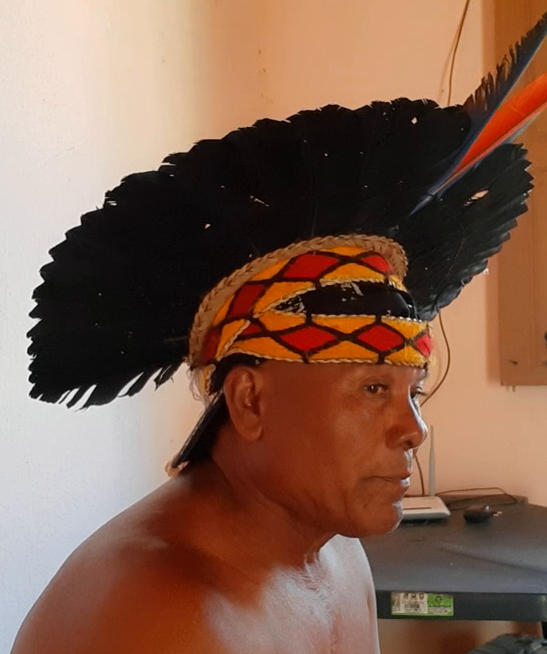
"In '78, the lumber company people put up a lot of sawmills here in the region. This whole region here was forest, from Eunápolis, Caraíva, Barra Velha. The loggers finished everything off! They set up the sawmills in Eunápolis, but took the timber from here in the region!"
Cacique Ipê: Indigenous leader, social and environmental activist
The growth of Arraial's neighborhoods happened slowly. Wiliam Gonçalves Silva, known as Wil, a history teacher and native resident, says that from the 1970s on, people with greater purchasing power bought and occupied the more upscale areas, such as the historic center. As a result, the natives slowly moved out to the outskirts. As the population grew, so did the need for land for housing, and with it deforestation.
At that time Arraial was still a tourist destination little known to Brazilians. Wil recalls that transition: "From the 80s on, everything changes, with the arrival of the first foreigners and of people who weren't natives, who came to Arraial d'Ajuda looking for a different place, a different lifestyle... Everything was enchanting at the time, both for those who arrived and for the native, when they received an offer to sell their house. So, little by little, my family was pushed to the neighborhood (Santiago, one of the outlying neighborhoods). Talking about Arraial's neighborhoods was still talking about a piece of forest. A part that was impenetrable for housing". In the period Wil refers to, buying a lot in Arraial was an easy and cheap task. The owner of a beachfront property said that her late husband traded the 2,000-square-meter property for a luxury watch. Today the same property is worth millions of reais.
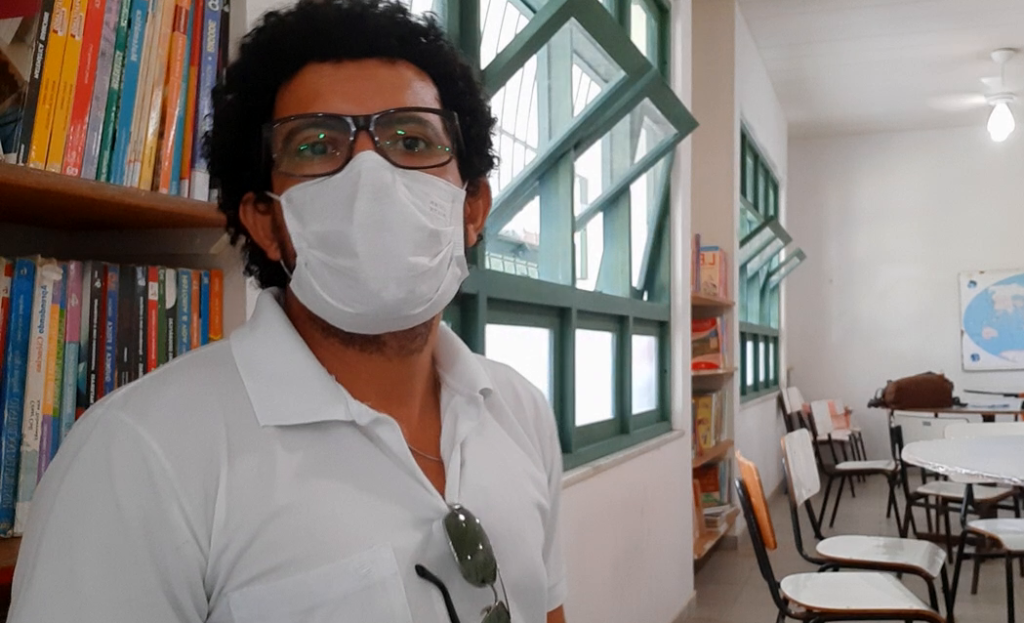
"From the 80s on, everything changes, with the arrival of the first foreigners and of people who weren't natives, who came to Arraial d'Ajuda looking for a different place, a different lifestyle. Everything was enchanting at the time, both for those who arrived and for the native, when they received an offer to sell their house. So, little by little, my family was pushed to the neighborhood (Santiago, one of the outlying neighborhoods). Talking about Arraial's neighborhoods was still talking about a piece of forest. A part that was impenetrable for housing"
Wiliam Gonçalves Silva (Wil): History teacher and native resident
Fernando Azevedo, born in São Paulo, arrived in Arraial in '76. An environmentalist and entrepreneur, during his career as an architect and landscape designer he was troubled by the origin of the wood used in his buildings. He then began producing tree seedlings and planting them. Later, the need to learn about the species he grew in his nursery led him to seek out Pedro Borges, a Pataxó timber worker and expert on the local forests. Pedro made Fernando his apprentice and passed on to him a very rich body of knowledge about the forest.
Talking with Fernando is a lesson in ecology. He draws attention to something new happening in Arraial's forests: “...These trees are going extinct! So we can plant precious trees that are not managing to reproduce in the altered forest. It's already very altered! For example, if I go into a remnant of Atlantic Forest here, if I go under an amescla tree, there are hundreds of little seedlings. You go under a Pequi tree, there's none. Go under an Ibiruçu, you don't see any! Aquariquara, there's not a single seedling.”. In his reflections, Fernando says the reason is the reduction of pollinating animal species, such as bees, and of seed dispersers, such as bats and small mammals. Without these animals, plants cannot cross-pollinate to reproduce or spread their seeds. This finding is, in a way, alarming, because it shows that forest regeneration does not depend solely on growing seedlings and planting trees.
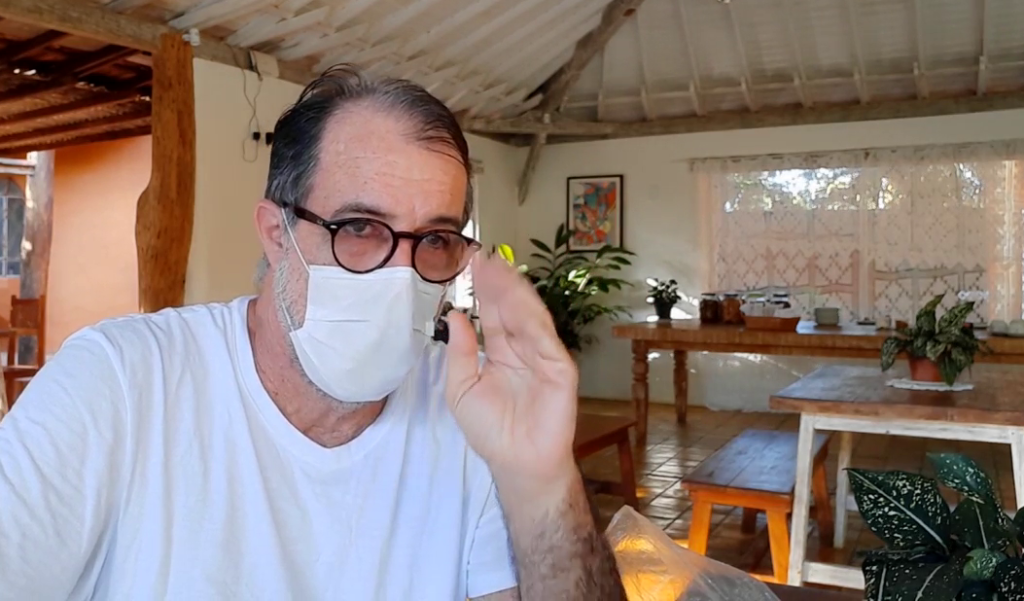
“...These trees are going extinct! So we can plant precious trees that are not managing to reproduce in the altered forest. It's already very altered! For example, if I go into a remnant of Atlantic Forest here, if I go under an amescla tree, there are hundreds of little seedlings. You go under a Pequi tree, there's none. Go under an Ibiruçu, you don't see any! Aquariquara, there's not a single seedling!”
Fernando Azevedo: Environmentalist and entrepreneur
Lawyer, city councilman and local resident Vinícius Parracho says that until the 1990s it was common for people to get around between places along trails through the forest. In the following decades there was a rapid increase in the opening of new areas and roads, transforming the natural scenery. As a result, the place grew and lost much of the charm and bucolic air that still persist. In the 2000s, demand for property from people coming mainly from the Southeast increased. It was then that condominiums, large developments and land occupations began to appear.
In the wake of this growth, nature, which is Porto Seguro's greatest asset and the main attraction of Arraial d’Ajuda, has been threatened. The beaches and forests, backdrops for tourism marketing campaigns and for sales of large real estate developments, are at the same time destroyed and reduced. Year after year, a growing number of people who dream of having a place to live in contact with nature, or simply to invest, increases the demand for land. Arraial's waterfront, for example, has been built up to the point that the ocean can no longer be seen. On the high ground, on the cliffs, luxury houses, condominiums and hotels grow in apparently uncontrolled fashion.
On one side, with the approval of the public administration, some developers clear huge areas. On the other, speculators, investors or simply people who buy the dream of a beach house indirectly encourage deforestation. Squeezed into the outskirts, low-income people looking for space attempt occupations, followed by the felling of forests. Some of these areas, such as the Tropa Costeira farm, regarded by the occupants as vacant public land (terra devoluta), get caught up in a tangle between the courts, people who claim to hold title, and families looking for space3.
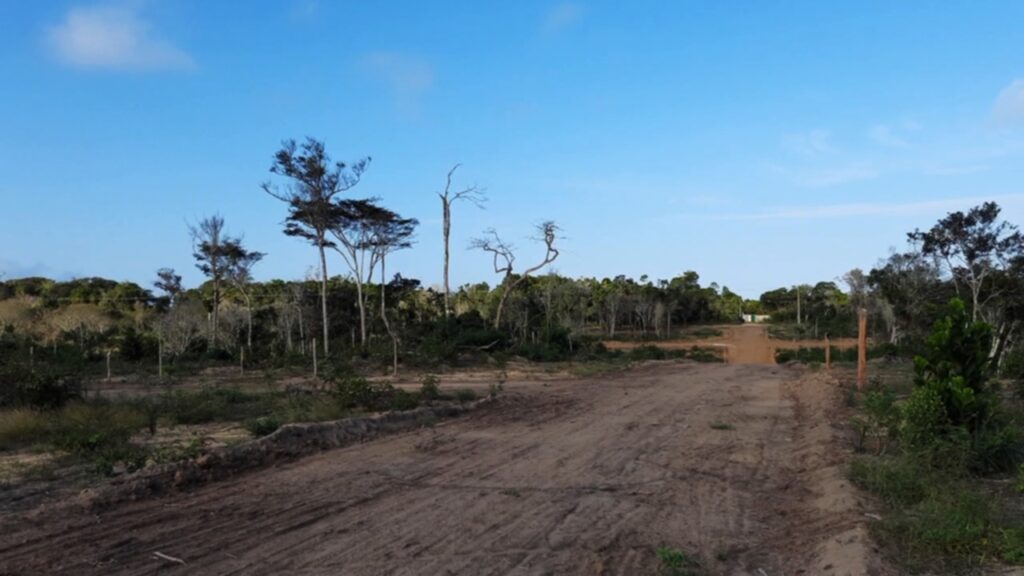
On one side, developers. On the other, speculators and families looking for space. In between, the forest.
The problems don't stop there. With the expansion of the real estate market, the demand for natural resources, especially groundwater, and the debris from construction create a difficult equation. The amount of trash and rubble with no proper disposal, scattered at random across the district, the reduction in rainfall and the extreme events linked to climate change make up the perfect storm for future managers.
Going against this dystopian scenario, Arraial d’Ajuda is still surrounded by a mosaic of large preserved and protected areas. Examples are the Pau-Brasil National Park, the Rio dos Frades Biological Reserve and other small private conservation units known as Private Natural Heritage Reserves (RPPNs). These places provide refuge for wild animals that are slowly abandoning the most heavily affected areas.
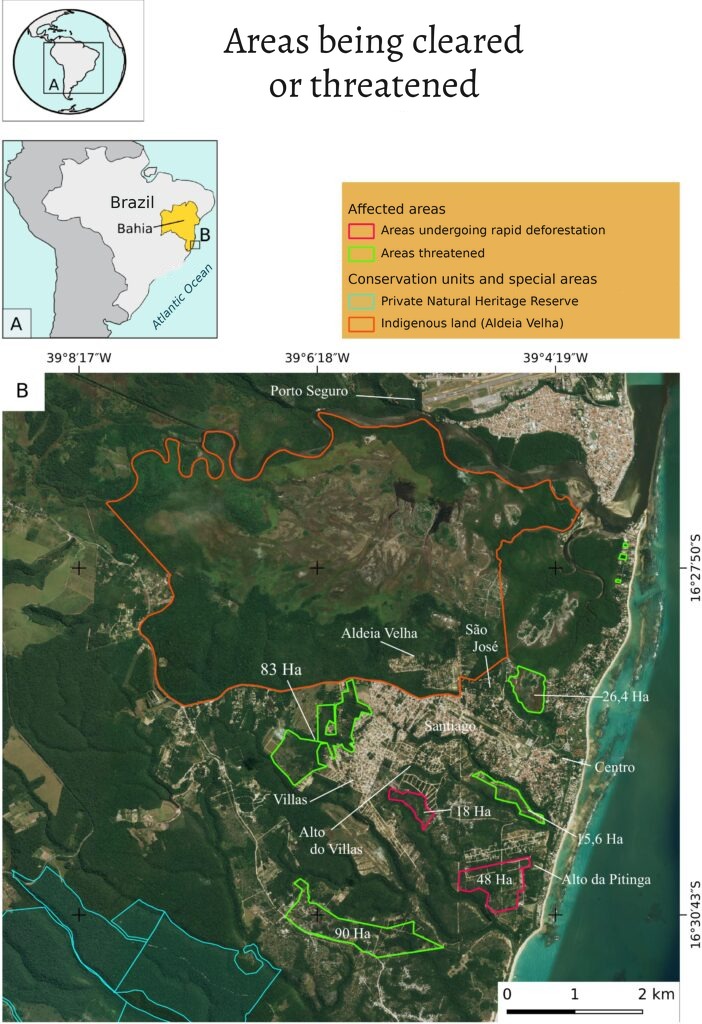
A recent study involving a consortium of universities in Brazil, among them the Federal University of Southern Bahia4, showed that the region's many forest fragments still shelter a rich diversity of mammals. The researchers even recorded large animals, such as deer, capybara and tapir, and even top predators such as the jaguar and the puma.
On the other hand, initiatives are emerging from people and organizations fighting to reduce the problems linked to deforestation and the destruction of Arraial d’Ajuda's natural resources. One example is the NGO Verdejar D’Ajuda, a nonprofit association born from the dream of some residents to plant a million trees in the region. The NGO's current activities are focused on Parque Central, a huge area of federal land lodged in the urban center.
“Verdejar”, as it is known, began its work discreetly, receiving donations to buy supplies and pay for labor in the production and planting of seedlings of native tree species. Recently the association gained legal recognition as a legal entity and has already started relevant projects, with the production and sale of seedlings, training of people and environmental education.
After several attempts in the region's environmental scene, Vinícius Parracho saw in politics the quickest path to fight for the causes he believes in. With the contagious idealism of youth, he and his team have already proposed almost a dozen laws related to environmental management in the municipality: "Even if we don't manage to achieve what we intend, I think we have a favorable scenario. Porto Seguro is a city where, because it is a tourist city, the environmental issue is still very tied to the economic issue, unlike industrial cities or commercial cities. And when you're in tourism, the environmental issue is more sensitive, right!? So the people who hold the capital, who control economic activity, the big hotels, everybody is worried about the environment, because it will directly impact the city. I think it's easier to implement environmental public policies in a city like Porto Seguro, and they can be the flagship".
One of the project proposals conceived by Vinícius, together with Fernando Azevedo, is the Immunity Seal for the big trees in the region. The idea is to guarantee the protection of the trees while receiving their ecosystem services, or rather, the environmental, social and even economic benefits they can bring to people, above all the very rich seed bank for producing seedlings.
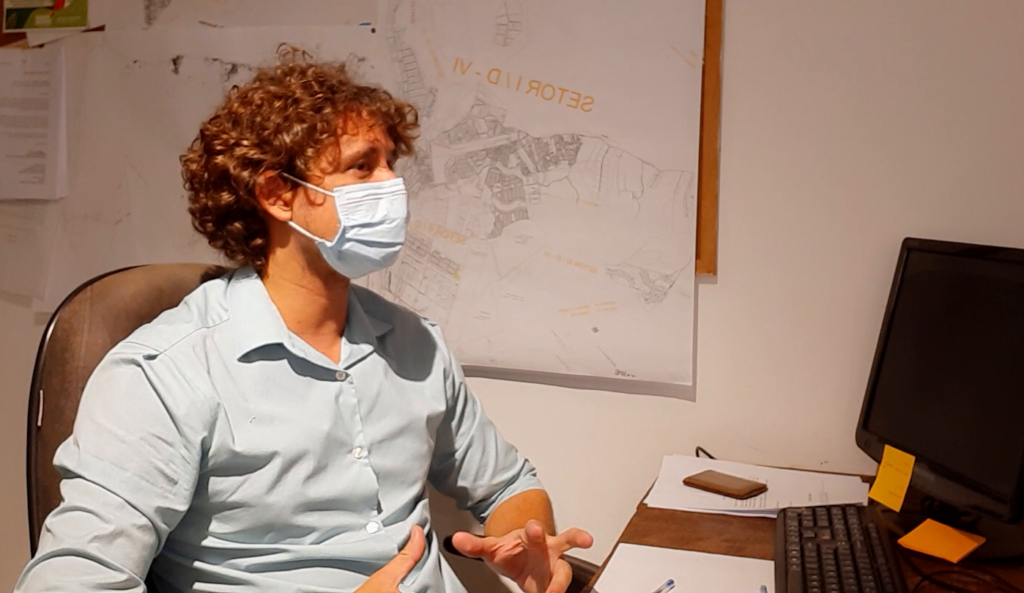
"Even if we don't manage to achieve what we intend, I think we have a favorable scenario. Porto Seguro is a city where, because it is a tourist city, the environmental issue is still very tied to the economic issue, unlike industrial cities or commercial cities. And when you're in tourism, the environmental issue is more sensitive, right!? So the people who hold the capital, who control economic activity, the big hotels, everybody is worried about the environment, because it will directly impact the city. I think it's easier to implement environmental public policies in a city like Porto Seguro, and they can be the flagship."
Vinícius Parracho: resident, lawyer and city councilman in Porto Seguro
On his rounds looking for seeds, Fernando Azevedo had the idea of mapping and inventorying the big trees. That is how the project “The Giants of Arraial” was born. Fernando's experience with trees became so great that today he knows many of the giants one by one and has become a reference even for scientists who visit the region. He can identify a species in the forest even without seeing the crown and its leaves, just by the look of the trunk's bark. I walked with Fernando through his nursery, squeezing between small trees and bromeliads. He talked about the scientific and common names of the plants and, with a big smile on his face, showed a set of little seedlings that would be planted by children on World Cleanup Day, held on September 18, 2021.
I met Fernando at Parque Central the next morning. A group of people, children, adults, teachers, was working on an area a little larger than a hectare. In one corner, near the street, people sorted and weighed the collected trash. Metals, plastic, glass and paper were carefully stored in large bags and sent for recycling. In the other corner, some of Fernando's little seedlings had already been planted. He gestured, pointing out to the children each species planted, speaking of their importance to ecology and to humans. A truck with a tank bed distributed water in small buckets and jugs to the people watering the plants. Sweaty but in good spirits, they watered the newly planted little trees one by one. Erica Munaro, the forestry engineer of Verdejar D'Ajuda, supervised the planting, guiding the children in transferring the seedlings to the ground and in caring for the planting holes. At the end of the effort, at lunchtime, the group looked with pride at the work done. The children imagined what these trees would be like when they grow up. In the vast desert of political, social and environmental uncertainty that dominates Brazil in the 21st century, the group has at least one certainty: that seeds were planted in the soil, and in the minds and hearts of the new generations, capable of leveraging a different future for Arraial d’Ajuda.
 Content licensed under Creative Commons, as indicated in the captions.
Watch also
Caio Gabrig Turbay is a geologist, environmentalist and professor at the Federal University of Southern Bahia. He believes in a world of true deeds, solidarity and respect.
References
SCANTIMBURGO, André. O desmonte da agenda ambiental no governo bolsonaro. Perspectivas: Revista de Ciências Sociais, v. 52, 2018.
DOS SANTOS, Anderlany Aragão et al. Ameaças, fragilização e desmonte de políticas e instituições indigenistas, quilombolas e ambientais no Brasil. Estudos Sociedade e Agricultura, v. 29, n. 3, p. 669-698, 2021
2- https://www.aquitemmata.org.br/#/busca/ba/Bahia/Porto%20Seguro
http://www.ceama.mp.ba.gov.br/mata-atlantica.html?id=1353
4- MAGIOLI, Marcelo et al. The role of protected and unprotected forest remnants for mammal conservation in a megadiverse Neotropical hotspot. Biological Conservation, v. 259, p. 109173, 2021.
Comments
Your comment will be read and approved before it appears here.